


Guide
Short guide to the visit
Room 1 - Welcome to Pavarotti's home
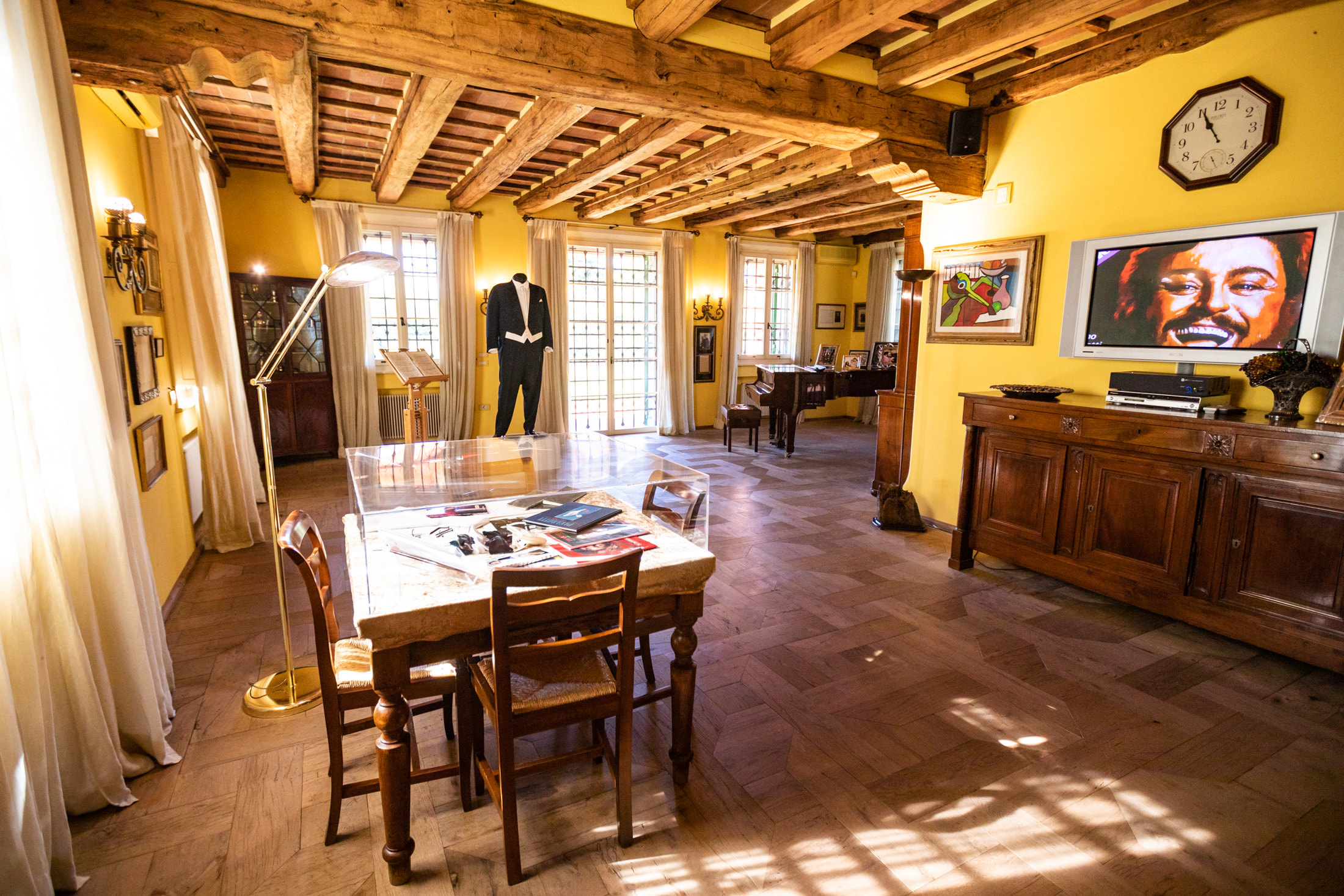
Welcome to Maestro Luciano Pavarotti's Home. Built in early 2000, it was the residence where Maestro lived in the last years of his life with his wife Nicoletta and daughter Alice.
The furnishings and objects have remained unchanged, witnessing his daily life. The main living room, where he spent most of his time, reflects his personality with bright colours, natural wood and beamed ceiling.
Here Pavarotti received friends, dined and played cards. A distinctive feature is the Steinway piano, also used for auditioning young talents to whom he gave free lessons. Next to the piano is the tailcoat he wore doing concerts, accompanied by the iconic white handkerchief he began wearing in the 1970s to overcome the embarrassment of performances where he had no prescribed movements, such as in opera.
On display in the room are autographed letters from great musicians, such as Puccini, Verdi and Mascagni, and personal objects, such as the notebook with his performances and the bent nails, a talisman for good luck. Hanging on the walls are the Maestro's colourful paintings.
Room 2 - Lust for life
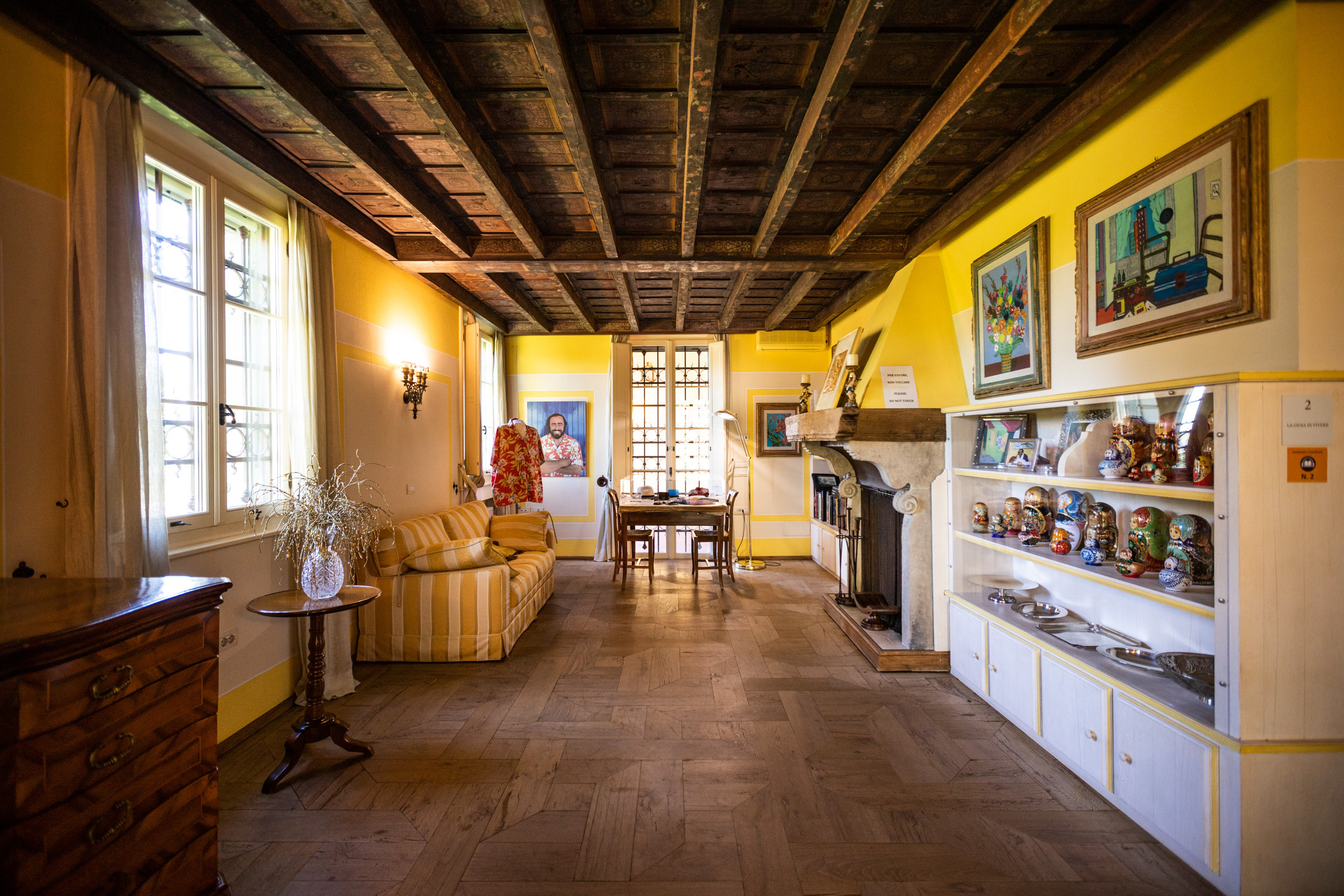
The room reflects Luciano Pavarotti's bright and sunny personality, which, together with his unique voice, contributed to his worldwide success. Maestro, known for his colourful and lively attire, liked floral shirts and scarves. Also in this room, the walls are decorated with his paintings, created during the 1980s and 1990s, when, inspired by the role of the painter Cavaradossi in Tosca, he developed a passion for painting; he signed his works with the pseudonym “LUPA”. A painting particularly dear to him, inspired by the panorama of his New York apartment, hangs near the fireplace. The room also displays objects related to his leisure time, such as cards and sketches on napkins and handkerchiefs. These items testify to his liveliness and passion for the arts, even off stage.
Room 3 - Window on the world
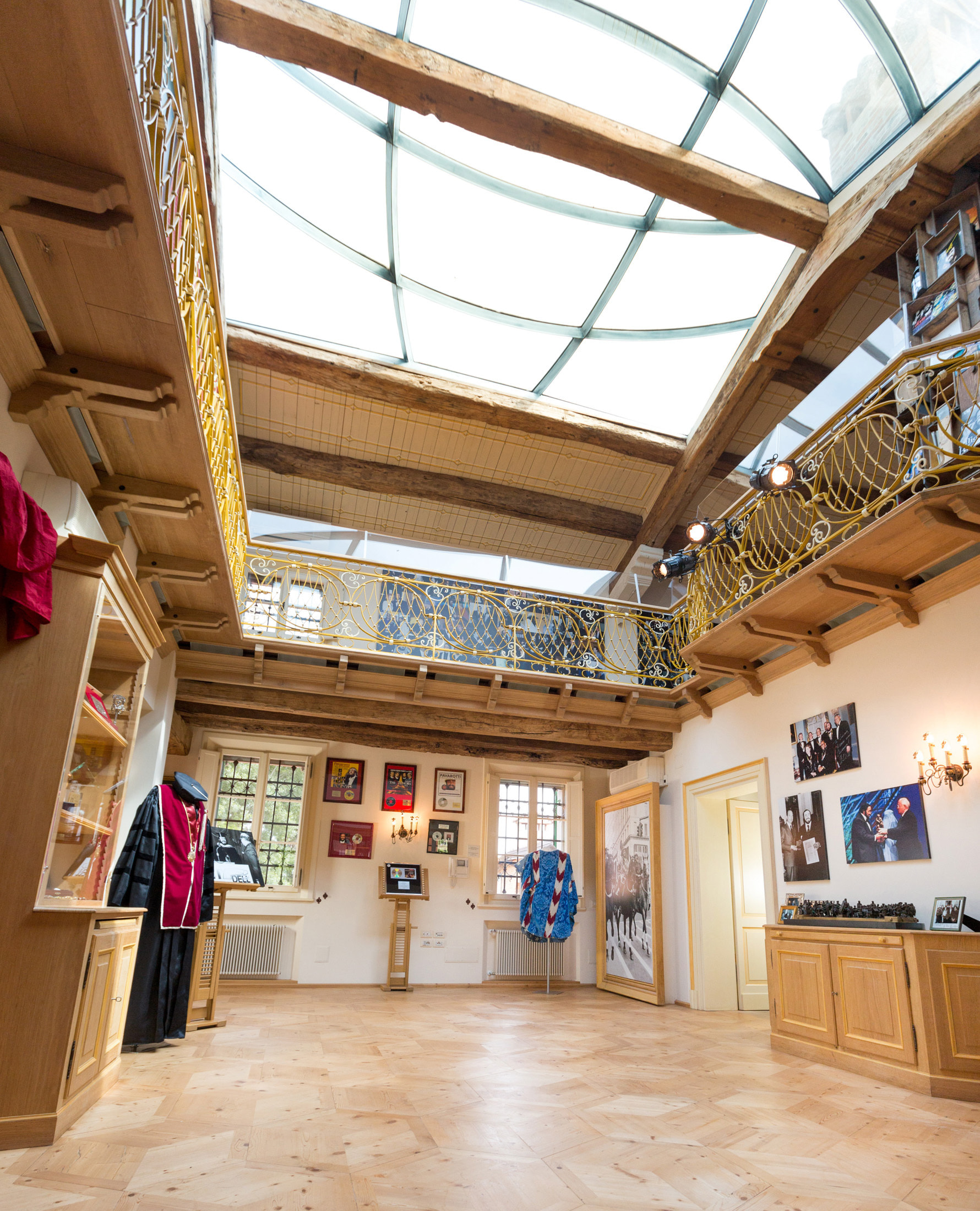
This room is lit by a large skylight, expressly requested by Maestro Pavarotti to be bathed in the sunlight he loved so much. On the walls and in the display cases are some among the 500 awards he received during his career, including 6 Grammys, 2 Emmys, and various international recognitions such as the Légion d'Honneur and the title of UN Messenger of Peace. Pavarotti has also received the Nansen Award for his commitment to refugees, the World Social Award and the Kennedy Center Honors Award. Among the exhibits is the cloak worn during the 1980 Columbus Day Parade, where he was named Grand Marshal. Gold and platinum records hang on the walls, including the album “Essential Pavarotti”, the first classical record to reach the top of the UK pop charts. Photos depicting Pavarotti at award ceremonies complete the display, which precedes the entrance to his bedroom.
Room 4 - The bedroom
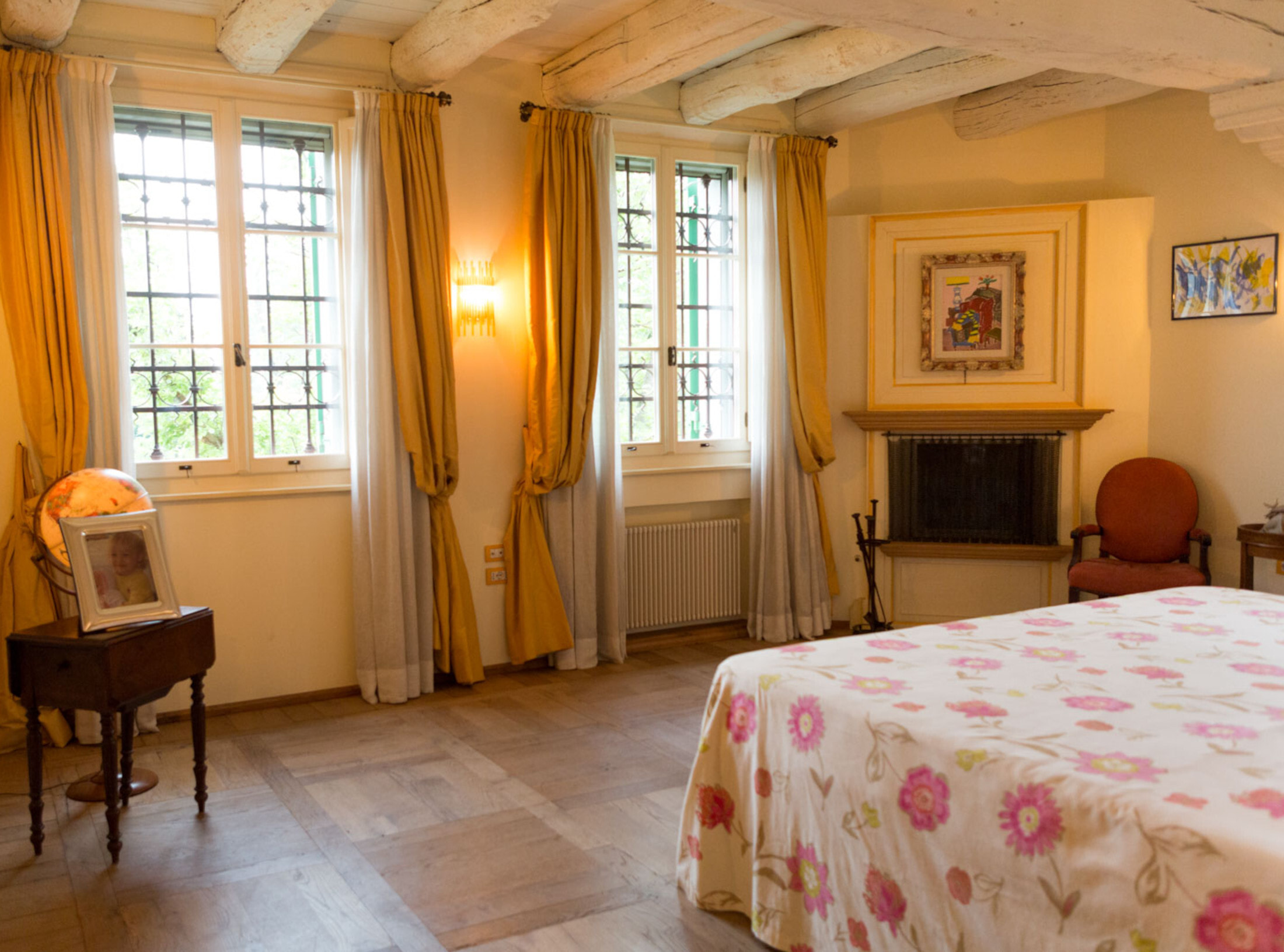
Maestro's bedroom, where he passed away on September 6, 2007, is a place charged with emotion and intimacy. This is the place where he spent the last period of his life, watching thrillers, playing with his daughter and reading sports newspapers, as a passionate Juventus fan. In the walk-in wardrobe are the accessories that contributed building his recognisable icon, such as panamas, soft hats and the famous scarves through which he protected his throat.
The visit continues with the rooms dedicated to opera, beyond the red velvet curtain.
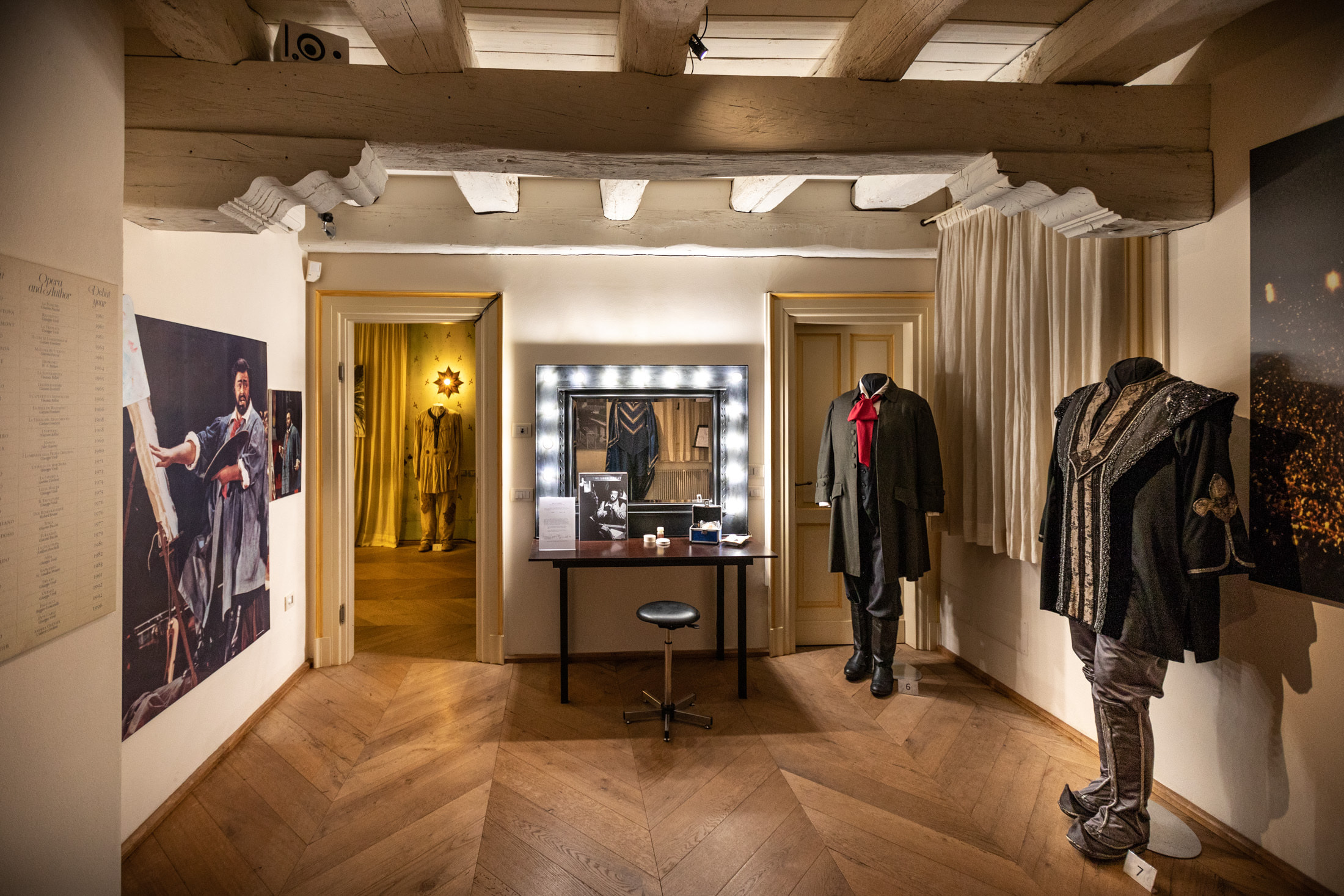
Rooms 5, 6, 7 - Opera
Rooms 5, 6 and 7 are dedicated to opera, the art form in which Luciano Pavarotti has starred since his debut in 1961. In these rooms you can see some of the costumes from the roles that were most dear to him among the 29 he has performed in his career.
His debut in opera came when he played Rodolfo in Puccini's “La Bohème”, a role that became emblematic. Later, in 1963, his career exploded with a performance at London's Covent Garden, and Decca called him for his first recordings. In 1965, he made his debut at La Scala in Milan under the baton of Karajan, and in 1966 at the London Coliseum, where he sang the legendary nine high C's of “La Figlia del Reggimento”, never before performed by any tenor. His career continued with great international successes, such as his debut at the NYC Metropolitan in 1972 and the historic tour of China in 1986. Pavarotti became the absolute symbol of Italian belcanto and opera worldwide, with performances that have remained unparalleled. His farewell to the opera stage came in 2004 with “Tosca” at the Met.
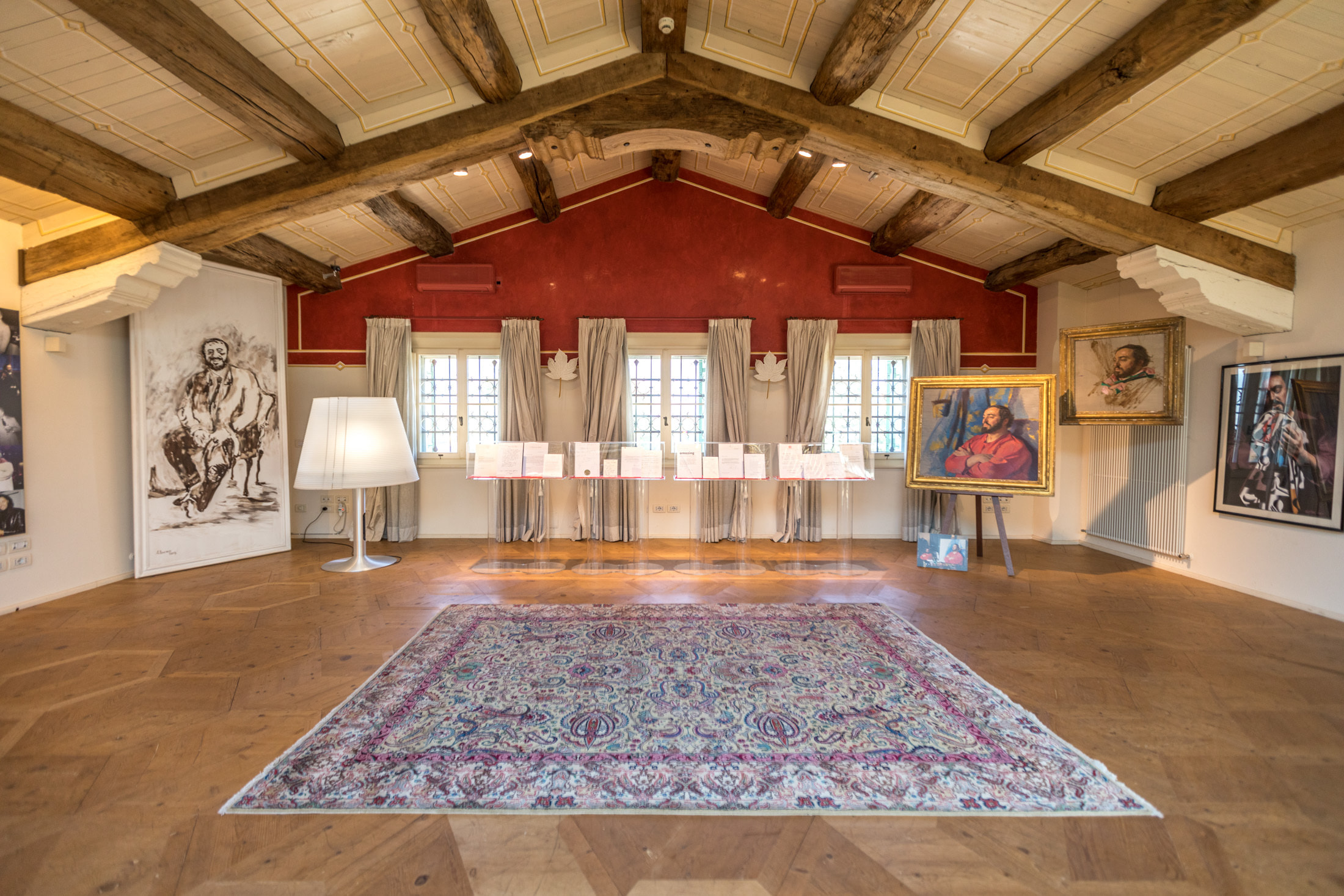
Room 8 - The Greats and Passions
The top floor is a bright open space displaying photographs of Pavarotti with celebrities and famous people, such as Sinatra, Bono, Kofi Annan and Lady Diana. At the back, some of the letters received from these great personalities are displayed. The opposite wall features portraits of Pavarotti by artists such as Salvatore Fiume and Mark Kostabi. The big screen shows videos of his performances, including concerts with the Three Tenors and outdoor shows, such as those in Central Park and under the Eiffel Tower. These concerts revolutionized classical music, making opera accessible to a wider audience. The tour continues in the “Backstage footage room”, where other exclusive footage is on display.
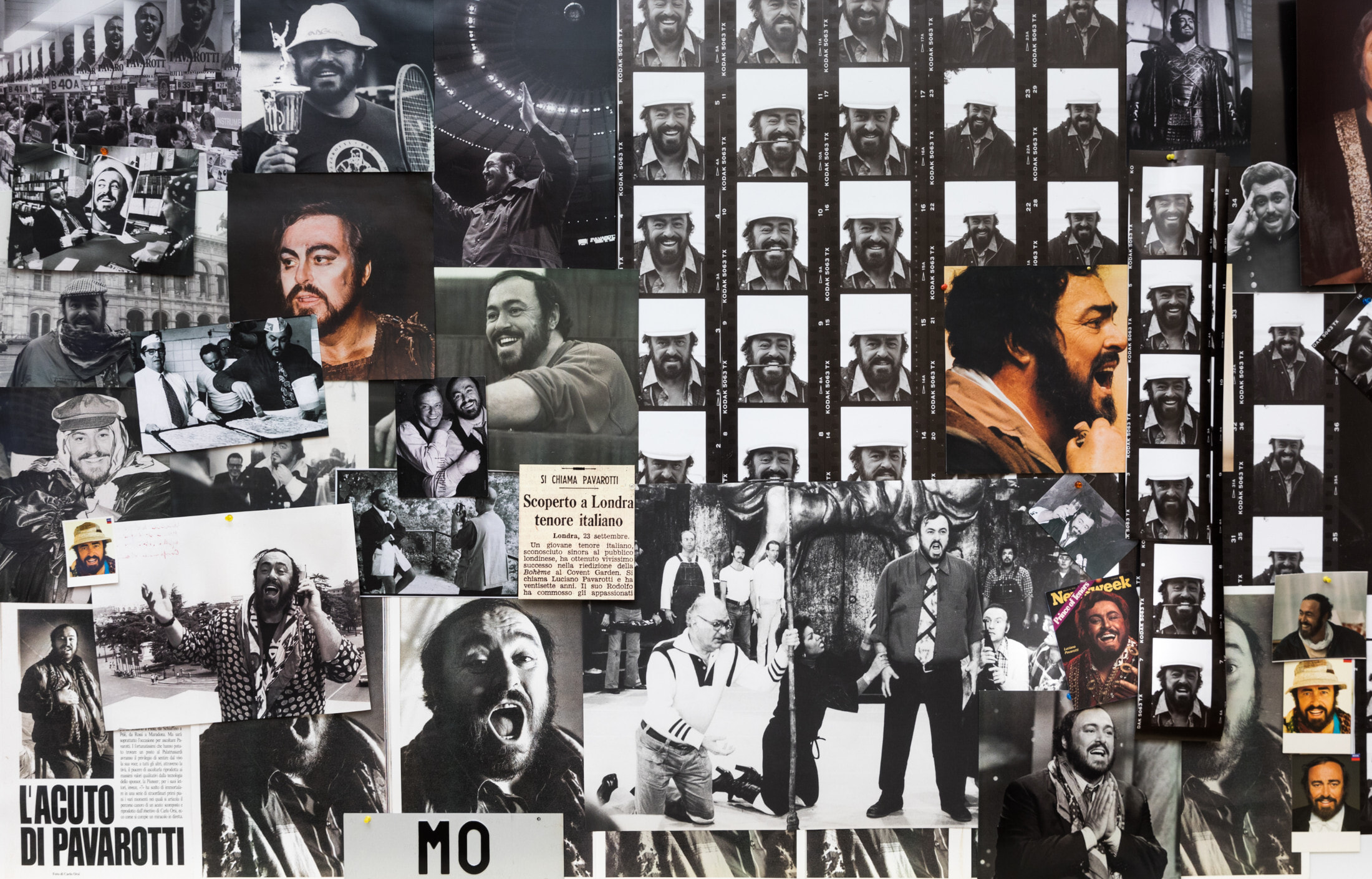
Room 9 - "Backstage footage room"
Access to the unpublished backstage footage room is reserved for small groups. If occupied, you can wait in the previous room, which is enriched with photos and portraits of the tenor, also in original versions. The video shows unpublished fragments of the Maestro backstage or during rehearsals, taken from the Foundation's archive. At the end, you can take the lift to floor -1.

10 bis: The Decca room
Pavarotti believed immensely in the popularization of opera through recordings: recordings, in fact, were an extremely popular and democratic tool and music could also reach the homes of those who could not afford a seat in a theatre.
His recording production was, therefore, extremely prolific, recording almost 200 different albums in his career. Also unique was the close bond of mutual trust and loyalty maintained by Maestro with his record company, the London-based DECCA label, for which he remained the standard-bearer throughout his life.
In this room you can listen to some of the most famous arias remastered with the latest technology to enjoy the full purity of sound of Maestro's voice.
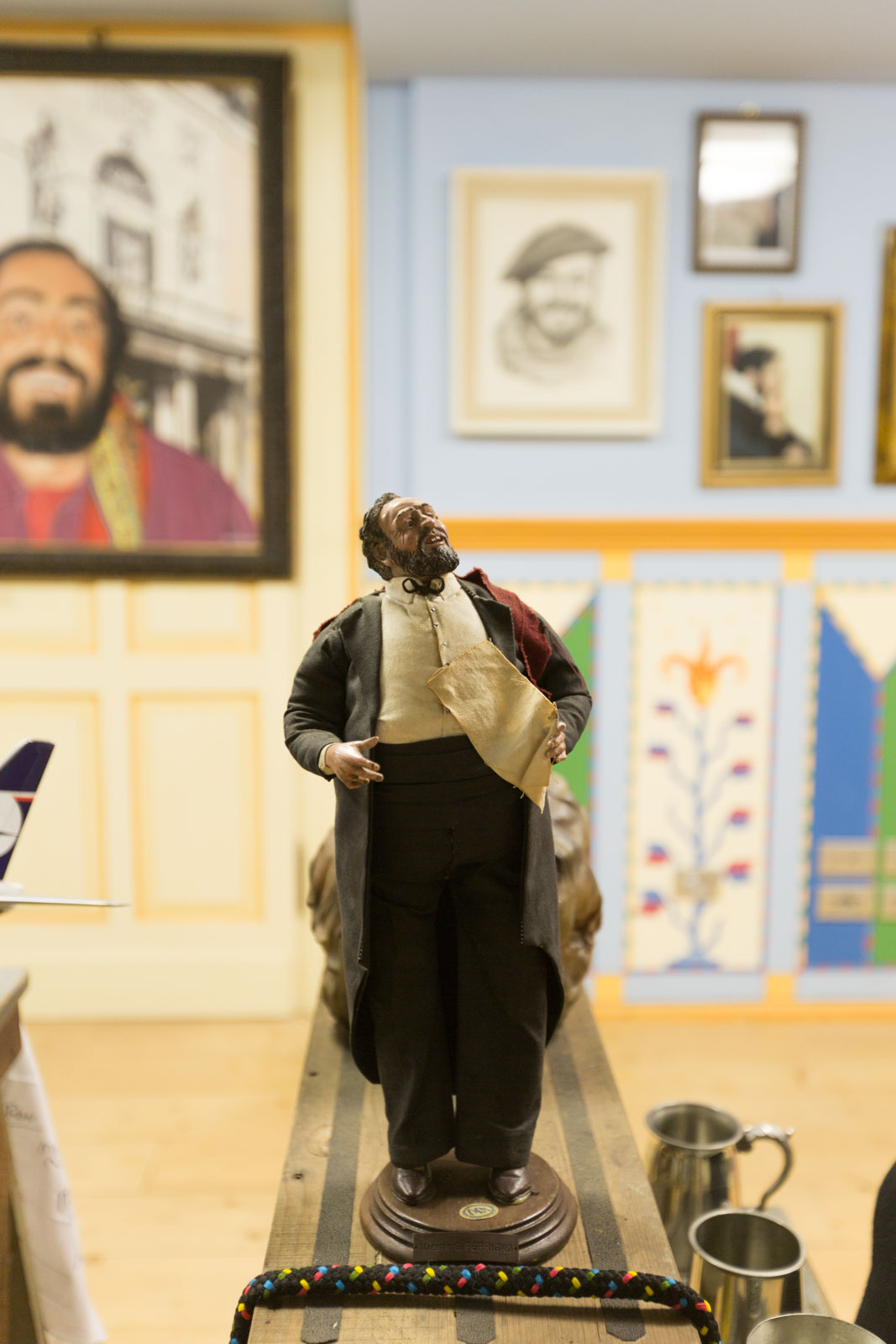
Room 10 - "Fans around the world"
This room displays some of the thousands of gifts that Maestro Pavarotti has received from fans all over the world, who have sent him a tribute to show their esteem and affection.
Visitors who wish to dedicate a thought to Maestro can write their own message using the material provided on the table in the room and then post it in the special glass urn.
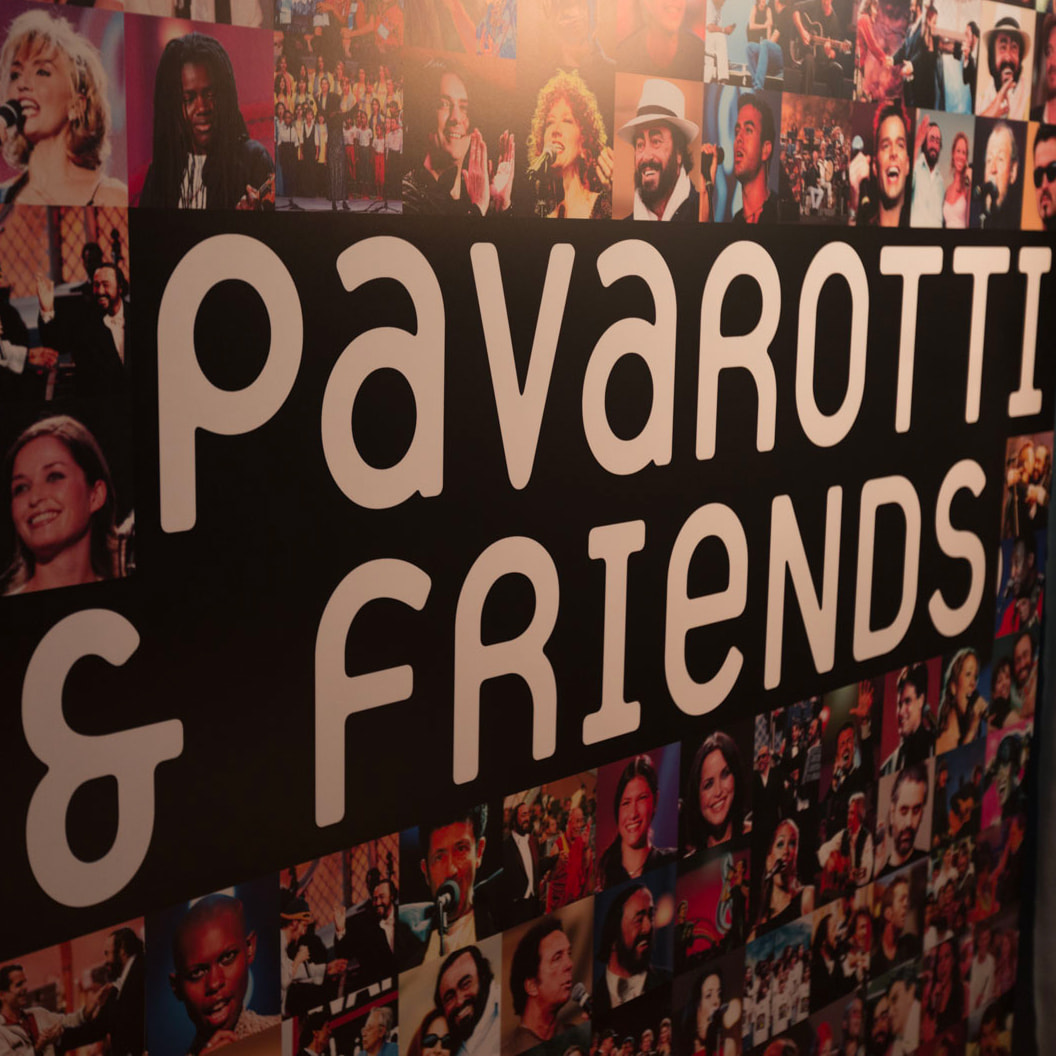
Room 11 - "Pavarotti & Friends" - Exit
Pavarotti broke down barriers between musical genres, promoting music as a vehicle that make some good not only to its listeners but far beyond.
Modena, his hometown, has hosted the “Pavarotti & Friends” concerts since 1992: this event brought together artists of different genres to raise funds and increase awareness among the general public for causes that were often forgotten in the news, especially children victims of war. Proceeds went to projects in countries such as Bosnia, Cambodia, Kosovo and Guatemala, financing medical assistance and socio-educational initiatives.
Room 12 - Alice's playhouse
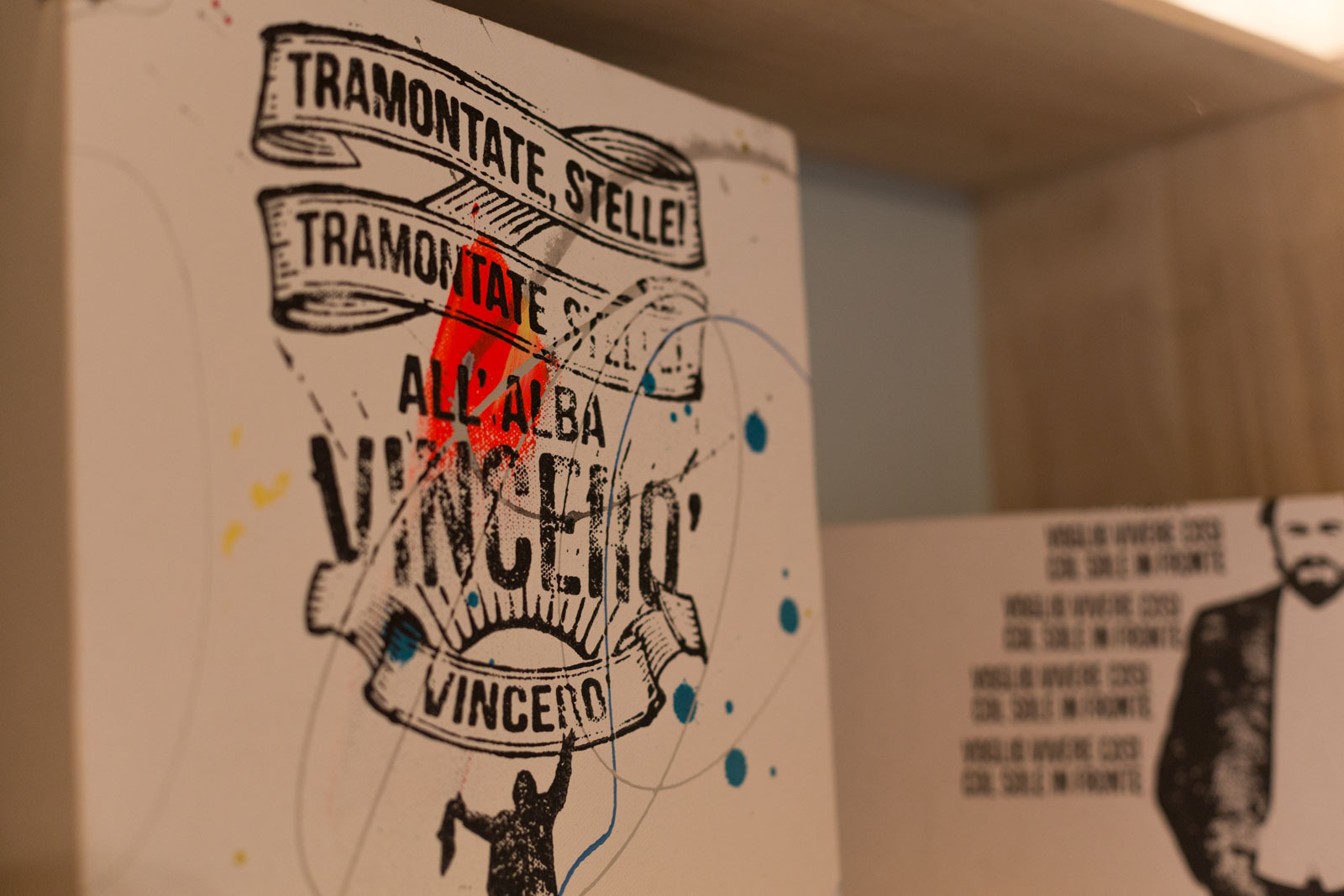
Going up a few steps, you can end your visit by accessing the book store, housed in what was once Alice's playhouse, the enchanted refuge that Pavarotti had built for his youngest daughter and which still houses some of her toys and puppets.
The tour is over.
The Luciano Pavarotti Foundation thanks you for your visit.
The Pavarotti Foundation is a non-profit organization that stages cultural events and runs the Home Museum to preserve the human and artistic memory of Maestro.
If you enjoyed the visit, you can write a review and invite other people to learn more about the world of Luciano Pavarotti. We hope that you, too, can come back to visit us again.
Arrivederci!
